


Hey Golden Whiskers family,
For a long time, I thought play naturally faded out as cats aged.
Kittens play. Young cats play.
Senior cats… nap.
And while it’s true that older cats slow down physically, I’ve learned something important over the years — especially after caring for Mia into her 20th year:
Slowing down doesn’t mean losing instinct.
It just means the expression of that instinct changes.
In this week’s Golden Whiskers Podcast, feline behavior expert Dr. Marci Koski shared something that completely reframed how I think about enrichment for older cats — and honestly, for all cats.
Play isn’t about burning energy.
It’s about honoring who cats are at their core.
If you’ve ever wondered whether your senior cat still “needs” play — or what play should even look like anymore — this conversation is a must-read.
Here’s what stood out to me in this 8-minute clip, which you can listen to below.
✨ Episode Snapshot
In this segment, you’ll learn:
🧠 Why Play Still Matters as Cats Age
Play keeps both the body and the brain active. As Marci explains, we don’t want senior cats’ bodies or minds to atrophy from being sedentary — even if their movement looks very different than it used to.
🐾 The Prey Sequence (Your New Play Blueprint)
Cats are predators by nature, no matter their age. Marci walks through the four stages of the prey sequence:
Stare
Stalk / Chase
Pounce / Grab
Kill Bite
The key insight?
Not every stage needs to be intense or high-energy to be fulfilling.
🎯 How to Adapt Play for Senior Cats
Instead of encouraging sprinting or jumping, Marci recommends:
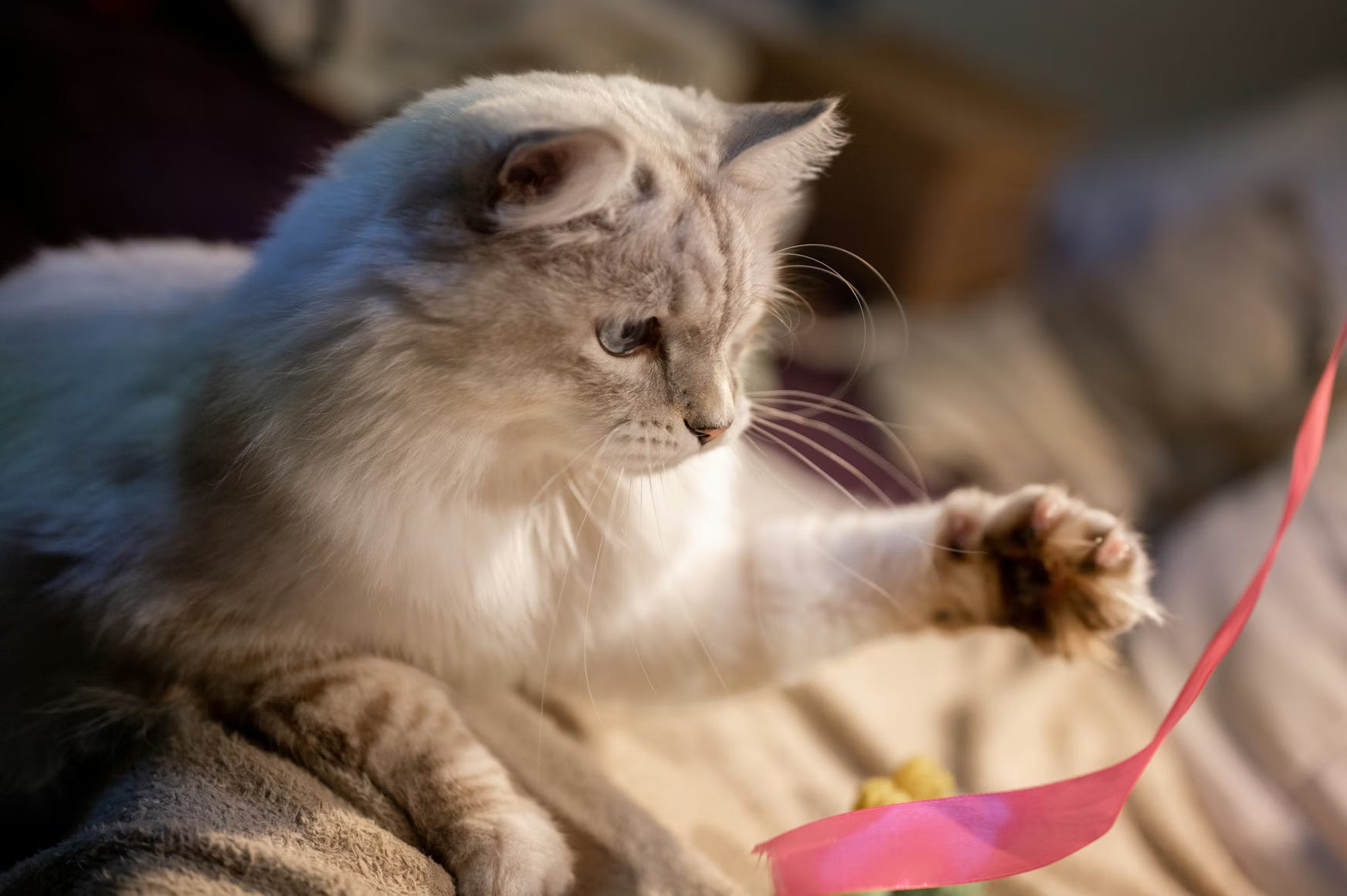
Slow wand toys dragged within reach
Rolling balls across the floor
Batting, tagging, and grabbing motions
Kicker toys or catnip toys for biting and wrestling
The goal is success and engagement, not exhaustion.
🔴 Why You Should “Close the Loop” After Play
Visual stimulation like bird-watching, cat TV, or laser pointers can be exciting — but Marci emphasizes the importance of finishing the prey sequence.
Following stimulation with a physical toy and a small snack completes the natural rhythm:
hunt → eat → groom → sleep
Senior cats, especially, tend to sleep more deeply after a satisfying play session.
📘 Marci’s Recommendations for Cat Owners
Keep play sessions in your daily routine, regardless of your cat’s age
Use the prey sequence as your guide, not random play
Adapt play to aging bodies — slow, close-to-the-ground movements work beautifully
Avoid forcing intensity — let your cat feel successful
Always close the loop after stimulation with a toy and food
Honor the hunt–eat–groom–sleep rhythm, especially for senior cats
🐾 What I’m Trying with Niko and Milo
Even though Niko and Milo are still young, this conversation was a great reminder that how we play matters just as much as how often we play.
I’ve been more intentional about:
Letting them watch and stalk before moving toys
Slowing wand play down instead of constant fast movement
Ending play with a small snack instead of just walking away
What I love about Marci’s approach is that it sets cats up for a lifetime rhythm — one that will serve Niko and Milo just as well in their senior years as it does now.
🎧 Listen to This Week’s Episode
If you want to hear Marci explain the prey sequence in detail — and pick up even more practical ideas for enriching your cat’s life at any age — you can listen to the full episode here:
👉 Your Senior Cat Isn’t Slowing Down - Here’s What They Actually Need with Dr. Marci Koski
✨ Final Thought
Aging doesn’t erase instinct.
When we stop assuming our cats are “done” playing — and start meeting them where they are — we give them something far more powerful than exercise.
We give them purpose.
And sometimes, that’s exactly what a senior cat has been waiting for all along. 🐾💛
Thanks for reading, thanks for paying attention to the quiet signals, and thanks for caring about your cats at this deeper level.
Until next time,
💛 Scott | Golden Whiskers
Thank you!